
What Is a Contingent Worker and How Contingent Employment Works

Flexible staffing has become part of everyday workforce decisions rather than a special arrangement. Project timelines rarely stay fixed, workloads rise unevenly, and many tasks appear only for a limited period. In practice, a contingent worker is often added when the work is clearly defined but short-lived — a narrow assignment, a specific skill gap, or a temporary surge that does not justify expanding the permanent team.
The difficulty starts with the term itself. In many teams, the label “contingent worker” is applied loosely. Contractors, temporary staff, and external specialists are grouped together, even though the expectations around duration, responsibility, and involvement often differ. This lack of distinction usually surfaces once work is already underway.
Problems appear when demand shifts faster than planning assumptions allow. Without a clear understanding of how contingent roles fit into the workforce model, teams hesitate, reassign work inconsistently, or respond too late. Defining how contingent work is used does not eliminate change, but it reduces guesswork when priorities move and decisions need to be made quickly.
What Is a Contingent Worker?
A contingent worker is engaged to perform a clearly defined piece of work without becoming part of a company’s permanent staff. When asking what is a contingent worker, the key distinction is not skill level or location, but the limits of the relationship: the role is tied to a specific task, project, or time window, rather than an ongoing position. Unlike full-time employees, contingent workers are brought in with an expected endpoint and without long-term employment obligations on the employer’s side. This distinction matters beyond terminology. From a legal perspective, it affects contracts, compliance, and responsibility boundaries. From a management perspective, it shapes how work is planned, assigned, and concluded, making it clear where ownership begins and ends once the task is complete.
What Does Contingent Worker Mean in Modern Workforce Models?
In today’s workforce models, the contingent worker meaning is broader than it used to be. Companies no longer treat contingent roles as a temporary fix for unexpected shortages. In many cases, these roles are planned in advance and built into how teams operate.
So, what does contingent worker mean in a practical sense now? It usually describes someone engaged for a clearly defined purpose — a project phase, a specific task set, or a limited period — without becoming part of permanent headcount. The focus is less on employment status and more on scope, timing, and responsibility.
How the Meaning of Contingent Employment Has Changed
For a long time, contingent employment was treated as a short-term workaround. Companies turned to it when someone was absent, a deadline was missed, or demand briefly spiked. The expectation was simple: fill the gap, then return to the usual structure.
That view no longer holds. Today, contingent employment is often planned rather than reactive. Organizations define roles, timeframes, and outcomes in advance, using contingent workers as a deliberate part of how work gets done. This shift is closely tied to how teams operate now — across locations, time zones, and changing project scopes.
Technology has played a key role. Remote collaboration tools, digital task tracking, and platform-based staffing make it easier to integrate external contributors without slowing execution. As a result, contingent employment has moved from the margins into a managed, repeatable workforce model.
Who Is Considered a Contingent Worker Today?
A contingent workforce is defined less by titles and more by how work is framed. A contingent worker is brought in to cover a specific need — a task, a project phase, or a limited time window — with a clear expectation that the role will end. The relationship is bounded from the start, which matters more than where the work happens or how visible the role appears inside the organization.
In practice, this can take many forms. A specialist may join to close a narrow skill gap. Temporary staff may be added to handle short-term pressure. External experts might contribute only at a particular stage of delivery. Some work closely with internal teams, others operate at a distance. What they have in common is not the format of work, but the fact that scope and duration are defined upfront and do not evolve into open-ended commitments. Because of this, companies increasingly treat contingent workers as a flexible extension of their workforce model, not as an exception to it.
Common Contingent Worker Examples Across Roles
When companies talk about flexible staffing in practice, contingent worker examples usually span several distinct types of engagement. The difference lies less in job titles and more in how the work relationship is defined and limited.
- Contractors
Engaged for a specific term or deliverable. Contractors are typically focused on completing agreed work within set boundaries rather than becoming part of the long-term team structure. - Freelancers
Independent specialists who work on individual tasks or ongoing assignments without employee status. Freelancers are common in design, development, marketing, and analytical roles. - Consultants
Invited to contribute expertise, assessments, or recommendations. Their involvement is usually advisory and tied to a defined business question or project stage. - Temporary staff
Hired to support day-to-day operations during short periods, such as staff absences or temporary workload increases. These roles are usually operational and time-limited. - Seasonal workers
Brought in to handle predictable demand spikes in industries like retail, logistics, agriculture, or hospitality. Their work follows known seasonal cycles.
Together, these contingent staffing formats allow organizations to adjust capacity, skills, and timing without relying solely on permanent hires.
Contingent Workforce vs Full-Time Employment
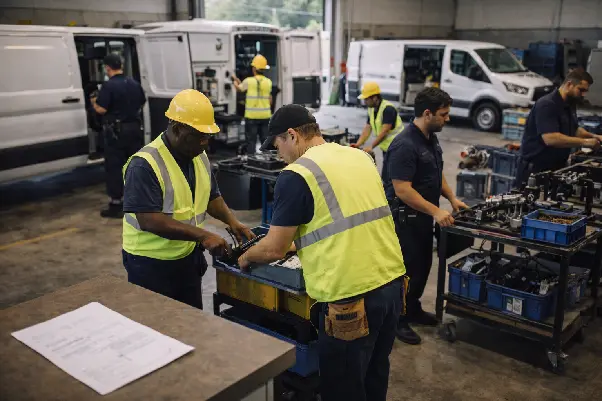
The difference between contingent and full-time work becomes clear once teams start planning delivery, not roles. Full-time positions are created to stay. They carry ongoing responsibility, internal context, and expectations that extend beyond a single task. Contingent roles, by contrast, are introduced with an endpoint in mind. The work begins because a specific need appears and ends when that need is covered.
This distinction matters when conditions are unstable. Full-time teams usually exist because the work is expected to continue. Responsibilities accumulate, internal context builds up, and roles evolve as work repeats. Contingent workers enter for different reasons: timelines are compressed, the scope is unclear, or the task will be over before a full hiring cycle makes sense. This difference tends to surface first in projects with shifting requirements, seasonal load, or narrowly bounded deliverables.
In day-to-day operations, the choice is rarely absolute. A permanent team holds processes and knowledge in place, while additional capacity is pulled in where variability begins. The arrangement is imperfect, but it allows work to move forward without constant restructuring or long pauses while staffing decisions catch up with reality.
How Are Contingent Workers Used Across Different Industries?
Contingent staffing appears wherever demand is uneven or work arrives in defined phases. Companies turn to a contingent workforce not because roles are optional, but because timing and scope are hard to predict. When workloads change abruptly, fixed headcount stops being a safety net. Hiring cycles do not accelerate just because demand spikes, and permanent roles are difficult to unwind when volumes fall. In these moments, contingent workers are brought in not as a strategic preference, but as a practical response to timing mismatches.
Contingent workers usually appear at the moment when work has already started to pile up. A task needs to be done, a skill is missing, or the workload spikes before anyone is ready to make a long-term hiring call. Instead of reshaping the team around every shift, companies add capacity on the outside and let the core roles continue without interruption.
Decisions here are driven by timing more than by planning. Projects move ahead whether recruitment is finished or not, and demand changes on its own schedule. Contingent staffing gives teams a way to keep moving and adjust along the way, without committing to roles that may no longer make sense once the situation settles.
Contingent Staffing in Project-Based and Seasonal Work
In project-based work, staffing decisions are usually tied to phases rather than roles. Teams expand when a new stage begins and contract once that stage is complete. This is common in IT projects, where developers or specialists may be needed intensively for a short window, but not once delivery moves forward. Keeping these roles permanent would slow teams down rather than help them scale.
Construction follows a similar pattern, though in a more physical environment. Different skills are required at different moments, and staffing changes as projects progress. Contingent workers give organizations room to adjust when priorities move faster than staffing structures. Instead of reworking the core team with every shift in direction, companies add or release capacity around existing roles.
Seasonal pressure makes this especially visible. In logistics and retail, volume can rise sharply within a short window and disappear just as fast. A contingent workforce is used to handle these surges without turning temporary demand into permanent headcount. Once activity levels stabilize, teams scale back naturally, without forced restructuring or operational fallout.
Why Do Companies Rely on Contingent Staffing Models?
In many companies, workforce decisions are no longer tied to headcount plans for the year. They are tied to contracts, projects, and workload windows that open and close unevenly. Contingent staffing fits this reality better than permanent structures because it allows teams to be built around actual work, not around assumptions made during annual budgeting.
Cost control is part of the equation, but not in a simplistic “save money” sense. With contingent employment, expenses move closer to operational activity. When demand drops, labor costs contract with it. When demand spikes, capacity can be added without triggering long-term salary, benefit, or compliance commitments that outlive the work itself.
Finally, uncertainty shapes these choices. When revenue pipelines are volatile or market signals are mixed, organizations limit irreversible decisions. Contingent models are not risk-free, but they allow businesses to adjust without dismantling their core teams when priorities shift.
What Is Contingent Worker Management and Why Does It Matter?

As companies expand their use of flexible labor, the main challenge shifts away from hiring. The real complexity begins after onboarding. Contingent worker management refers to how organizations coordinate, monitor, and align external workers with internal operations once they are already in the workflow.
Without a clear management layer, contingent work quickly fragments. Tasks are assigned through emails, messengers, or spreadsheets. Status updates arrive late or not at all. Responsibility becomes blurred because contingent workers are outside formal hierarchies, yet still influence delivery timelines and service quality. The issue is not intent or competence — it is structural visibility.
As the contingent workforce grows, these gaps compound. Managers lose a single source of truth. Teams operate on partial information. Decisions are made reactively instead of based on current workload, progress, or capacity. What starts as flexibility can turn into coordination drag.
This is why contingent worker management matters. It establishes shared rules for task ownership, progress tracking, and outcomes without turning contingent roles into pseudo-employees. When managed properly, external workers remain flexible while still operating within a predictable, transparent system. Without that layer, scale introduces risk rather than efficiency.
Managing Performance, Visibility, and Accountability
Managing contingent workers rarely fails because managers are too hands-off. It fails when structure is missing. Without clear task boundaries and visible progress, teams compensate with messages, reminders, and manual checks that slowly consume time.
Once work is in motion, gaps in visibility stop being theoretical. Managers begin to notice them when assignments overlap, updates arrive late, or no one can say with confidence what is blocking progress. When information is split between tools, delays are usually discovered after they have already affected delivery.
Having everything visible in one place does not prevent change, but it shifts when teams react. Adjustments are made earlier, while there is still room to move work around, rather than under pressure once timelines start slipping.
Accountability is more subtle. Contingent workers are not part of formal reporting lines, but responsibility still exists at the task level. When expectations, deadlines, and completion criteria are explicit, accountability becomes operational rather than hierarchical. Performance is evaluated through outcomes, not presence, which allows contingent teams to integrate smoothly without eroding managerial control.
What Are Contingent Workforce Management Solutions?
As contingent teams grow, operational friction rarely comes from people. It comes from tools that were never designed to work together. Contingent workforce management solutions address this gap by treating workforce coordination as a system, not a collection of improvised workarounds.
At some point, managing contingent work stops being a scheduling task and turns into a coordination problem. When assignments live in spreadsheets, instructions in email, and updates in chat threads, no one sees the full picture. A single change — a delayed task or a reassignment — forces managers to manually update multiple tools, knowing some version will still be outdated.
This is where contingent workforce solutions become necessary, not optional. They keep tasks, timelines, and responsibility visible even as people rotate in and out of projects. Instead of rebuilding context every time someone joins or leaves, managers work within a shared operational flow. The system holds continuity, so coordination does not depend on memory, inbox searches, or constant follow-ups.
Most importantly, these systems shift management thinking. Coordination stops being reactive. Decisions are based on current workload, availability, and execution status, not assumptions. The result is not tighter control, but fewer blind spots as contingent operations expand.
How Contingent Workforce Management Solutions Work
These systems operate by centralizing operational data that is otherwise scattered. Tasks, workers, deadlines, and progress updates exist in one environment rather than across disconnected files and messages.
Coordination starts with how work is tied together. Each person is assigned to a concrete task, each task has a time frame, and progress is tracked against what is actually happening. When priorities shift or timelines slip, changes do not have to be updated by hand in several places — the context stays intact as work moves forward.
The same structure applies when teams are mixed. Full-time staff and contingent workers often work on the same deliverables, even though their roles and access differ. The challenge is not collaboration itself, but keeping everyone aligned without building parallel processes or relying on constant manual adjustments.
This is where improvised tools begin to fail. Once contingent work is tracked through spreadsheets, email threads, and chat messages, every update creates extra work for someone. Schedules have to be checked, statuses clarified, context rebuilt. Many teams reach a point where flexibility starts costing more time than it saves, which is usually when they reconsider the setup and look for a single system that keeps workers, schedules, and visibility aligned.
How Do Contingent Staffing Solutions Support Workforce Flexibility?
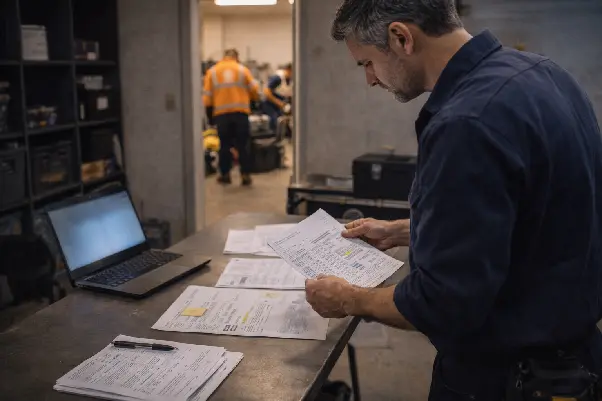
Flexibility in staffing rarely fails because of intent. It fails when adjustments take too long or require too much manual coordination. Contingent staffing solutions address this by turning workforce changes into routine actions rather than disruptive interventions.
When workload begins to creep up, teams usually do not have time to rethink schedules from scratch. Additional capacity is added around existing work, not instead of it. When activity slows, that extra layer is removed without leaving tasks hanging or forcing someone to untangle ownership after the fact. The structure stays the same, which is what keeps execution moving.
As the contingent workforce grows, control shifts in a different direction. It relies less on supervision and more on knowing what is already in motion. Managers look at current assignments, work in progress, and remaining capacity to decide what to do next. Flexibility remains, but it no longer relies on constant follow-ups or reactive interventions.
Trends Shaping Contingent Workforce Solutions
Several structural shifts are changing how companies approach contingent workforce solutions, and these changes are not short-term. One of the strongest drivers is the rise of project-based work. Organizations increasingly operate through initiatives with defined scopes and timelines rather than permanent roles. As a result, workforce capacity is assembled around projects, then reshaped once delivery is complete.
Another trend is a growing focus on manageability and risk. As contingent models scale, businesses pay closer attention to compliance boundaries, accountability, and operational visibility. Informal coordination methods that work for small teams stop being acceptable when external workers represent a significant share of delivery capacity.
Together, these trends push contingent workforce solutions toward greater structure. Flexibility remains the goal, but it is increasingly supported by systems that emphasize clarity, traceability, and controlled execution rather than ad-hoc arrangements.
Conclusion
In many companies, contingent workers are no longer an exception added on the side. They are brought in when projects need to start quickly, when demand shifts unexpectedly, or when specific expertise is required for a limited window.
As work increasingly unfolds through projects rather than fixed roles, and teams operate across locations and time zones, this type of labor becomes part of everyday operations. The reliance grows not because of strategy documents, but because it matches how work is actually organized and delivered.
What changes is not only who companies hire, but how they manage work. The biggest challenges rarely come from the contingent model itself. They come from lost visibility, unclear responsibility, and coordination gaps as external teams scale. This is why management matters more than the employment format. Without structure, flexibility creates friction instead of speed.
Effective contingent workforce management turns variability into an advantage. When tasks, schedules, and accountability are clearly defined, companies stay agile without losing control. From here, the next step is not adding more tools, but consolidating how work is coordinated across full-time and contingent teams.
If you want clearer control, real-time visibility, and a consistent way to manage mixed teams, start a free trial of Planado and see how contingent and internal work can operate within a single operational system.
FAQs
What is a contingent worker in simple terms?
A contingent worker is someone hired to perform specific work without becoming a permanent employee. They are typically engaged for a limited time, a defined project, or variable demand periods.
What does contingent worker mean compared to traditional employment?
Unlike traditional employees, contingent workers are not hired indefinitely and usually do not receive long-term benefits. Their work is tied to tasks or outcomes rather than ongoing roles.
Is contingent employment the same as freelance or contract work?
Freelance and contract roles are common forms of contingent employment, but the term is broader. It also includes temporary staff, project-based specialists, and seasonal workers.
How does contingent staffing differ from full-time hiring?
The difference shows up when work has to be planned, not described on paper. Full-time hiring assumes the role will stay relevant over time and gradually absorb responsibility. Contingent staffing is used when the work has a clear boundary — in scope, timing, or outcome — and does not justify creating a permanent position.
What are typical contingent worker examples in modern companies?
In practice, contingent workers appear wherever work is uneven. This can be contractors supporting a system rollout, specialists brought in for a defined project phase, seasonal staff added during peak periods, or external experts covering narrow tasks that internal teams are not set up to handle.
Why do companies invest in contingent workforce management solutions?
Once contingent work grows beyond a few isolated roles, coordination stops being intuitive. Tasks, schedules, and responsibility spread across tools and people. Management solutions are adopted when teams need a clearer picture of what is assigned, what is moving, and where gaps are forming, without rebuilding processes every time.
What risks should businesses consider when managing a contingent workforce?
The main risks usually surface gradually. Work ownership becomes harder to track, updates arrive late, and decisions are made with partial information. Without a clear structure, flexibility starts creating friction — not because the model fails, but because visibility and accountability are lost as scale increases.
